
Program (Draft)
Keynote Speakers
Keynote speech #1
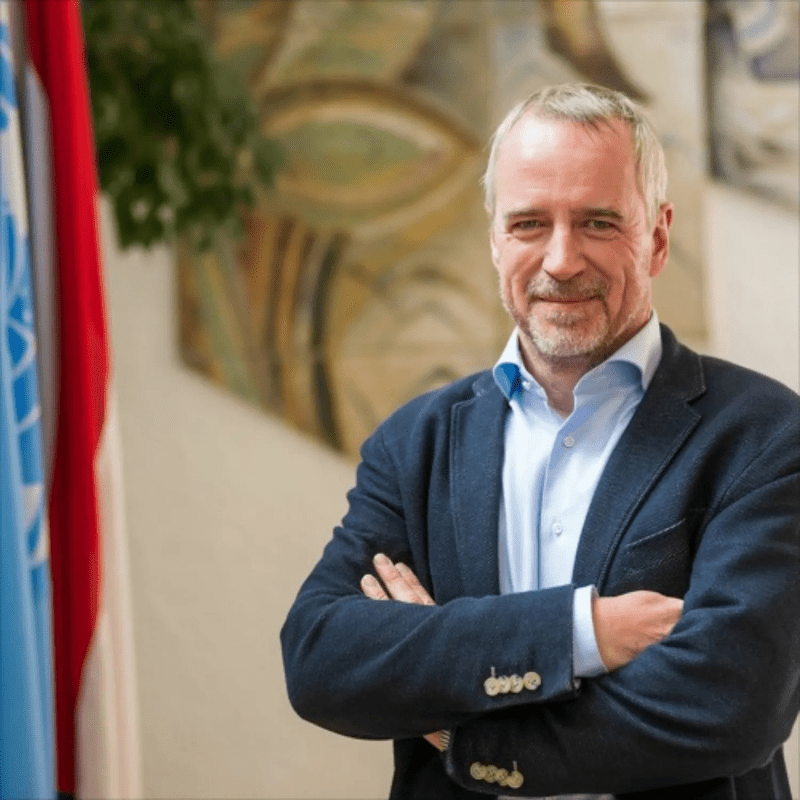
Bartel Van de Walle
The Founder and CEO, CASi Labs, Netherlands
“For Better or Worse? AI and Crisis Information Systems Design”
Abstract
For two decades, my colleagues and I have studied why crisis information systems — even well-designed ones — repeatedly fail to translate available information into aligned action. The work began with The Design of a Dynamic Emergency Response Management Information System (DERMIS), co-authored with Murray Turoff, Michael Chumer and Xiang Yao, which set out the design principles for the field. It continued through complementary lines of inquiry: with Gerd Van Den Eede on High Reliability theory and the conditions under which crisis-prone organisations either build or lose mindfulness; with Willem Muhren on Sensemaking Support Systems and the distinction between coping with information and coping with frames of reference; and with Bert Brugghemans and Tina Comes on the experimental enrichment of situation awareness in crisis response teams.
In 2020, with Tina Comes and Luk Van Wassenhove, this trajectory converged on the coordination-information bubble: the recurring pattern by which sensemaking, decision-making, information collection, and emergent coordination localise together into mutually reinforcing pockets, harden through path-dependency, and resist alignment even when communication is restored. Across all four lines of work, one concern recurs — the threat-rigidity that crises induce, and the design choices that either deepen it or relieve it.
Generative AI now intervenes across this entire program, and unevenly. It fulfils technical aspirations DERMIS could only gesture at in 2004; it regresses the validity-and-source guarantees the field once treated as foundational; it threatens the mindfulness practices High Reliability theory rests on; it transforms sensemaking and enrichment in ways that are simultaneously powerful and dangerous; and it changes how bubbles form, how fast they harden, and how — if at all — they can be closed. Some of these shifts are clearly for the better. Some are clearly for the worse. Most are both at once, depending on design choices that the field has barely begun to make. The keynote will trace the program from DERMIS to the present, propose what AI fulfils, regresses, threatens, and newly enables across each of its strands, and outline a research and design agenda for crisis information systems in the era of cascading transboundary risk and AI-induced decision failures. Worked examples are drawn from current work at CASi Labs and from cases in humanitarian response, civil protection, and critical-infrastructure governance.
Biography
Dr. Bartel Van de Walle is the Founder and CEO of CASi Labs, a Netherlands-based company pioneering AI-driven platforms for collaborative intelligence, crisis leadership, and strategic foresight. He previously served as Director of UNU-MERIT and Chair in Policy Analysis for Global Challenges at Maastricht University, following earlier roles as Full Professor and Head of Department Multi-Actor Systems at TU Delft and Fellow at the Harvard Humanitarian Initiative.
With a career bridging academia, innovation, and policy, Dr. Van de Walle has advised governments, UN agencies, and international organizations on crisis response, data-driven decision-making, and system resilience. He is a co-founder of the global ISCRAM community, has delivered keynotes worldwide, and has published extensively on humanitarian information management, cognitive bias in crises, and socio-technical systems.
At CASi Labs, he now focuses on democratizing expertise through AI, designing tools that help leaders and teams navigate complex challenges with clarity and foresight.
Keynote speech #2
Lazaros Iliadis
Professor, Democritus University of Thrace, Greece
“Machine Learning Modeling in Structural Security”
Abstract
As seismic events grow increasingly complex, the imperative to upgrade our structural security and disaster risk reduction strategies has never been greater. While traditional analytical models have long served as the backbone of civil engineering, the integration of Artificial Intelligence offers unprecedented capabilities in predicting and mitigating structural vulnerabilities. However, the adoption of these advanced computational tools is often hindered by the “black box” nature of complex algorithms. This keynote addresses this critical divide by presenting the development, deployment, and validation of advanced Machine Learning (ML) models specifically tailored for seismic resilience.
The presentation will explore purpose-built ML frameworks capable of predicting distinct failure modes in Reinforced Concrete (RC) beam-column joints. Moving beyond localized failures, the talk will detail how these models forecast the expected Seismic Damage Level (SDL) of entire RC structures under varying seismic loads. A focal point of this modeling is the nuanced impact of masonry infill irregularities. Frequently misclassified in older designs as purely non-structural elements, infills drastically alter building stiffness and damage propagation, compounding the challenge of accurate SDL forecasting.
Crucially, to translate computational output into actionable, real-world engineering trust, this keynote emphasizes the transition from predictive modeling to Explainable AI (XAI). By employing SHapley Additive exPlanations (SHAP), we unravel the algorithm’s decision-making process. This transparency not only isolates the specific structural features driving failure, such as soft-story irregularities, but also fosters the critical trust required to integrate AI into rapid post-earthquake assessments, resilient urban planning, and the future of structural engineering.
Biography
Professor of “Applied Informatics”, He served as head of the Department of Civil Engineering (September 2020 – August 2025), and Head of the Lab of Mathematics & Informatics of the School of Engineering of the Democritus University of Thrace, Greece. He is Coordinator and Consultant-Educational staff of the Program of Studies “Informatics” in the Hellenic Open University for 23 years in the row. He holds a BSc in Mathematics, Aristotle University of Thessaloniki, Greece, an MSc in Computer Science, University of Wales, Swansea (school of Mathematics and Informatics), United Kingdom and a PhD in Expert Systems, Aristotle University of Thessaloniki, Greece. He has been included in the Stanford list of the 2% most cited authors globally, for the last 4 years in the row and in the 0.5% of all scholars in ANN worldwide based on the Scholar GPS List. Prof. Lazaros Iliadis has authored co-authored (till 2025) 103 scientific research papers, in international scientific Journals with IF, 133 in Proceedings of International scientific Conferences and two academic scientific books. He is the General chair/Program Chair of 27 International Conferences in AI-ML, Guest Editor in 24 Volumes of more than 18 International scientific journals and Editor of 50 Volumes of International Conference Proceedings. Finally, Prof. Lazaros Iliadis is scientifically responsible of: i) Several competitive research projects, ii) The AkiDA, a major Private cybersecurity project for the Brainchip USA (California) & Australia (Cambera) company iii) personally served as a Researcher in the HORIZON Intereuropean MORPHEMIC, 2021-2022 project, with a budget of 15 million Euros (involving 13 European countries). Moreover, he was scientifically responsible for several ESPA (National Strategic Framework of Development) competitive research projects namely: the AID (Air Intelligence Defense) in cooperation with the Karteco private company, that won the 5th prize in the research innovation competition of the NBG – National Bank of Greece. The project Real-t-SO “Real Time Operational Control Tool of Combined Sewer Overflows at Coastal Cities” in cooperation the Water Company of Thessaloniki Greece (EYATH) and others. For more details see: https://dblp.org/pid/22/582.html
Keynote speech #3
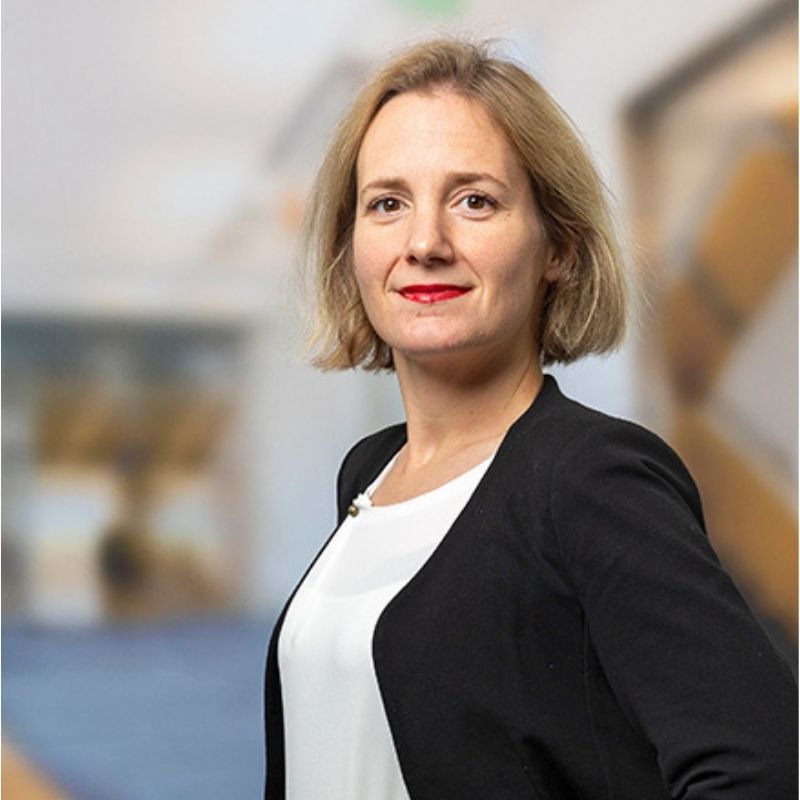
Tina Comes
“Digital Twins for Resilience: Supporting Complex and Uncertain Decisios”
Abstract
Digital twins promise a virtual ‘copy’ of an asset, a city or a region, in which we can safely monitor and intervene, or train and test decisions before disaster strikes. In this keynote, I ask what it takes for that promise to hold in disaster risk reduction and crisis management.
My answer starts with people. A digital twin of physical infrastructures can show, where a system fails. Once we add how people change their behaviour to adapt to different crises, the digital twin can also show who becomes exposed, and when. Even though often, resilience and vulnerability assessments assume that static indexes can be used, our research shows that behavioural adaptation leads to dramatic shifts in vulnerability and resilience. For those who plan for and respond to disasters, such findings change where to look and when to act. These insights come from models grounded in data from real crises across Europe and Africa.
Yet the better digital twin technologies become, the greater the temptation to let them act and decide for us. Building and using a digital twin is therefore itself a decision problem: what to automate, when, and why. I close with a research agenda for digital twins that keeps human judgement and accountability at the centre of disaster risk management.
Biography
Prof. Dr. Tina Comes is Director of the DLR Institute for the Protection of Terrestrial Infrastructures at the German Aerospace Center (DLR, Germany) and Full Professor of Decision Theory & ICT for Resilience at the TU Delft (NL). Her research examines how AI and information technology can support the decisions of individuals and groups in complex, uncertain and time-critical environments. She combines behavioural insights from field research on resilience and disasters with computational methods such as multi-agent models and digital twins, working closely with public authorities and international organisations. Under the EU’s Scientific Advice Mechanism, she chaired the Working Groups on AI for Crisis Management on Europe’s Strategic Crisis Management. She is an elected member of Academia Europaea and the Norwegian Academy of Technological Sciences, and an editor for Nature Scientific Reports. She is listed among the top 2% most cited scientists worldwide.